Can politics be art?

TV Shoot 8 29 2014 443

Darren Jernigan: The Right Thing

Four years ago Darren called me on Election Day and told me a story. Two years ago in the studio, I asked him to retell the story. I turned it over to my team, explained what I wanted and let them do their thing. The creative process is at times more passive than you might think. Darren told the story. A talented man set the lights and filmed it. A talented team edited it, mixed the audio and created the graphics to support the story. I think I like it so much because I was merely an observer to all of that. The power and beauty of this short film tells a story that transcends politics.

On the precipice of travel

Tomorrow we will go somewhere we’ve never been.

I always get a peculiar feeling when I’m preparing to go somewhere new. I’ve seen more of the world than most … but far less than I want to … or that I eventually will. A little excitement. A bit of fear. A curiosity about how it will be and when adventures we will have.

When going to a new place, I always skate between preparing and just receiving it fresh. I read a little, check the weather, make sure it’s safe. Then I let it go. I prefer to find a place once I get there. Let it come to me. Free space and open time.

We won’t go to the usual places. Ruby, a spectacular traveling companion, and I will find a breakfast place the first day, walk a bit, find a place that serves a late dinner. We’ll work to be alone and yet be open to meeting people.

We’ll probably find a museum but we won’t stay there more than an hour. It’s an affliction we both share. We couldn’t stay in the Louvre for more than an hour. It’s just how we are. But, we don’t count the time we spend in the little courtyard of the museum having a glass of wine and talking about what we’ve just seen.

We’ll find a church or a temple or a mosque to visit. A coffee shop. A wine store. We don’t stay in those places more than an hour either.

We’re not about checking the boxes when we go somewhere new. We let the place find us.

The Hole. The Haunches. The Concrete.

Your people say to my people.

Go down that hole and dig the coal.

Sit on your haunches and milk those cows.

Stand on this cold slab of concrete and run this machine for eight hours.

And so we do.

But what unnerves you, what disquiets you, what fills you with fear is that we do this without complaint.

We know who we are.

We know we can dig that coal. We know we can milk those cows. We know we can stand our post and run this machine.

Our fathers did it. Their fathers did it. We can do it. Our mothers set their jaws and willed us to finish without so much as a whimper.

What do we have to show for our labors? A pile of coal and a handful of blisters. Two and a half gallons of milk covered in a wispy froth. A paycheck where a man with green eye shades multiplied the minimum wage times eight.

Observed with a stoic distance. Our eyes on a distant horizon. Unbent. Unbroken. Unbowed.

That fear rising in your gullet is because you can’t understand how strong we are. We don’t know how strong we are. We’ve never come close to the bottom or the limit. It may not even exist.

So, go ahead. Tell us to go down that hole. Summon what’s left of your dignity and see what happens. See what happens.

The Greatest Gift

One of the greatest gifts I received from my parents was to be raised poor and, further, to be completely unaware of that fact.

We ate like kings. Eggs and fat slabs of bacon for breakfast. Big sandwiches for lunch with cold glasses of milk. Dinners that verged on a bacchanal. Fried chicken. Beef steaks. Green beans fresh from the garden. Ears of corn with silk still clinging to the kernels. Butterscotch pies with a soft cloud of meringue. Cat head biscuits, so called because they were as big as a cat’s head.

We raised the chickens and the beef. We hoed the garden to banish the weeds and picked the green beans and the corn. We milked the cows and carefully poured the thick cream off the top of the crocks to make butter and buttermilk.

There was no violence in our lives. No fear. Only work, love, acceptance and the challenge to be our best. Even when the animals were harvested for their meat it was done with care and respect … for them and for ourselves. We were stewards of the land. Putting back the nutrients we took out. Mending the fences.

It was all a gift. The gift of knowing how to hoe to the end of your row. The gift of carefully tending to animals and to treat them with dignity and respect. Bowing our heads in thanks for the bounty around us. To this day, when I open a can of beans or corn, I can’t leave a single kernel clinging to the can. It horrifies me to think that kernel made that long journey only to be wasted in haste at the end of the line. This, too, is a gift.

Cash money was in short supply. We didn’t notice much until we got around other people. It bred a certain stoicism in us. An unfortunate “I don’t give a damn” attitude toward what other people had. We weren’t victims. We were just a little bit different. Better we thought. Tougher. Frugal. Thankful. More able to take care of ourselves. Undaunted by a challenge or the hard work that precedes a reward.

Later I learned my mother and father went months or even years without health insurance because if they paid those premiums they wouldn’t have been able to dole out $20 to us for band trips, buy us trumpets, or to provide us with shoes and clothing to wear to school. Can you even imagine how it feels to realize that someone made such a sacrifice in silence? They weren’t victims either. They made a choice. It was their choice to make and they made it. I remain in awe of their quiet strength.

Today I am grateful for that upbringing. Still thankful. Still tough. Still frugal.

I miss those days. My brothers and sisters with me in the garden. Hoeing to the end of our rows. My mother standing in the kitchen door announcing the creation of another beautiful meal. My father gathering the handkerchief from his pocket to wipe the sweat from his eyes so he could look at his watch and calculate how much sleep he could get before he climbed in his trusty Chevy truck to go spend eight hours standing on concrete in a plant to make books in return for a few dollars at the end of the month.

Good days. Gone but not forgotten. Appreciated daily. Remembered.

A Quiet Rage

There are times I am filled with a quiet rage. A rage made more terrifying, even to me, by its quietude. There is a stillness. A quietness. A deep still lake of defiance filled by my Scots Irish ancestors and tended by me and mine. Fires are built and banked, swords sharpened, precious things are laid by for contemplation at a later time.

Defiance. My blood runs hot and cold in the same moment. I shall give no quarter and I shall ask none. I will win or I will lose and that is enough for me. I detest cowards. I detest liars, thieves and moochers. I admire men and women who get their hands and clothes dirty at work. Children who obey their parents. Men and women who stand against the day and refuse to be victims. I fight for them. I won’t let them down.

It seems I’m always five minutes from crying or getting in a fight.

Unsolicited Advice: Backstabbers, Naysayers, Blame shifters

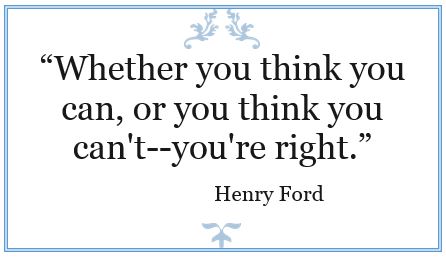
Whether you think you can Ford graphic

Having been a business and political consultant for 30 years means I’ve learned a few things about the kind of people you should have around you in your campaign. I’ve also learned a few things about the kinds of people you don’t want to have around you. If you have a team that includes a backstabber, a naysayer or a blame shifter on it then do yourself a favor and get rid of them now.

There is almost nothing worse on a campaign or a team than people who, through words or deeds, won’t accept responsibility or who are negative. Get rid of them.

Just this last year we consulted on a winning campaign where the power of positive thinking helped us time and time again. Early on, some people left the campaign after clashing with the leadership a few times on strategy and tactics. Of course, it might have also been because our first poll had us behind by 55-15. It felt bad at the time but it turned out to be a blessing in disguise. A positive, committed team turned that into a 54-46 victory in just six months. There were disagreements along the way but we had a forward-leaning posture, great team chemistry and strong leadership. That’s a winning combination in politics, in business and in life.

Two Men

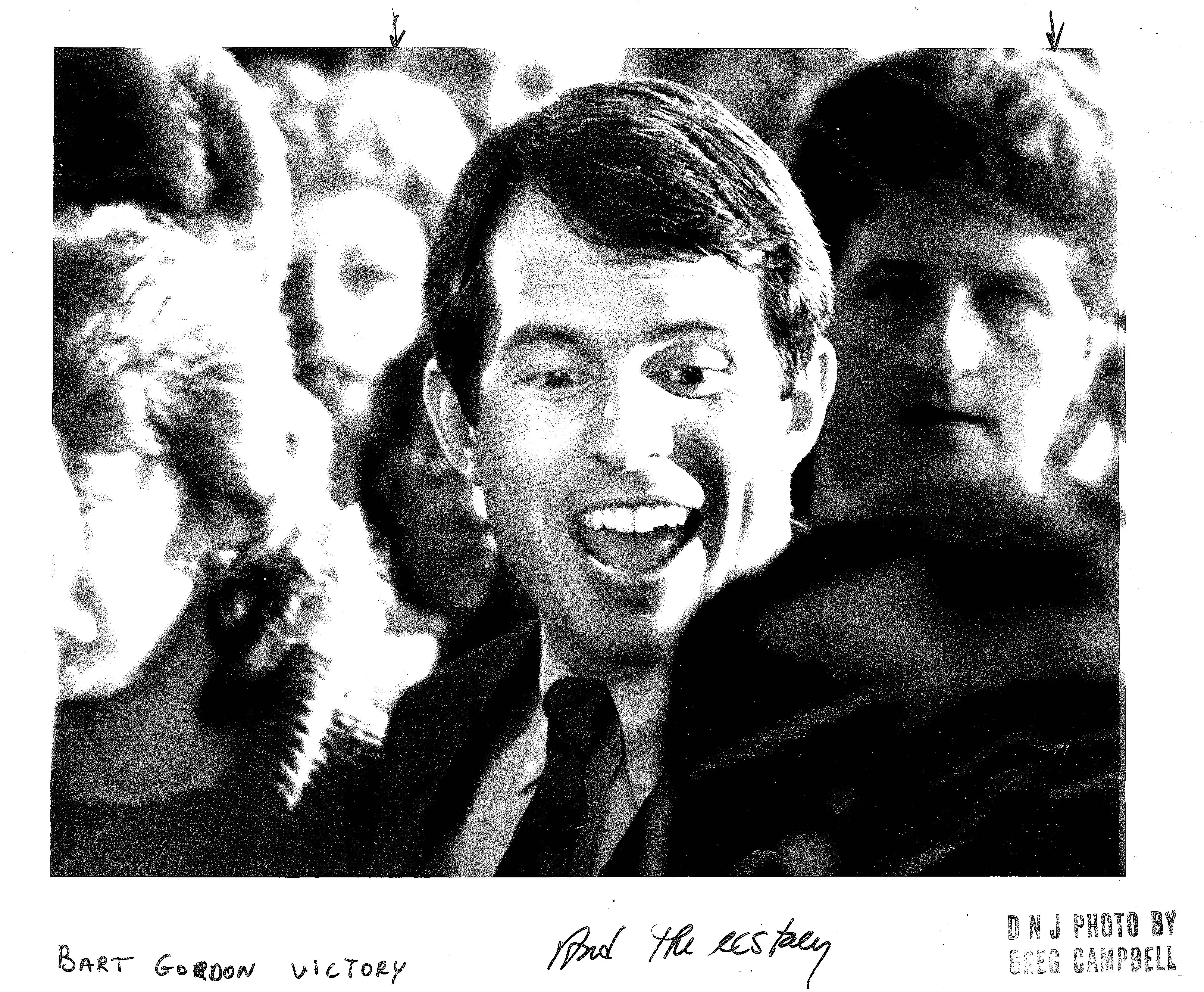
My first political campaigns were in 1984. I worked for two men, Bart Gordon and Joe Haynes. Bart won a crowded primary to become a congressman in Tennessee’s 4th District. Joe Haynes defeated an incumbent Democratic state senator. The confidence they placed in me launched a career in electoral campaigns that has now touched almost all 50 states and around 600 campaigns. I represented Bart and Joe, along with my business partner John Rowley, until 2010 when they both retired from their respective offices to focus on their legal careers and families. They remain my friends even until today.

Bart Gordon and Fletch 1984 edited Phillip North LL 7 12 2012 147